Notice to institutional clients
A new standard for support and operational continuity of your systems
We are formalizing our single support channel, reinforcing traceability, and proposing preventive management of the continuity of critical security platforms.
Reference
Notice No. CM2909011
Place and date
Santiago, Sep 1, 2026
Effective date
Oct 1, 2026
Support portal
visionaria.cl/es/soporte
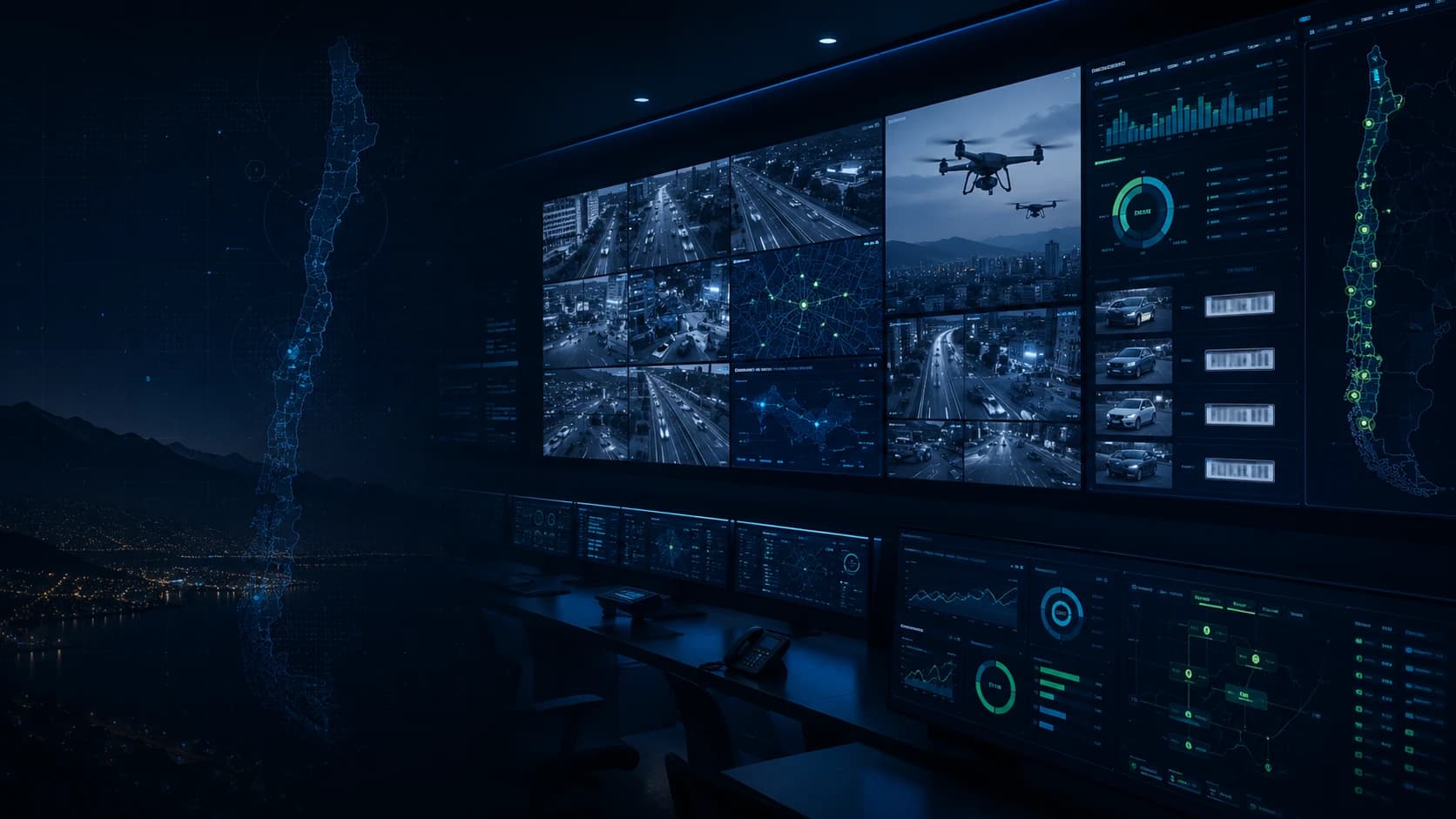
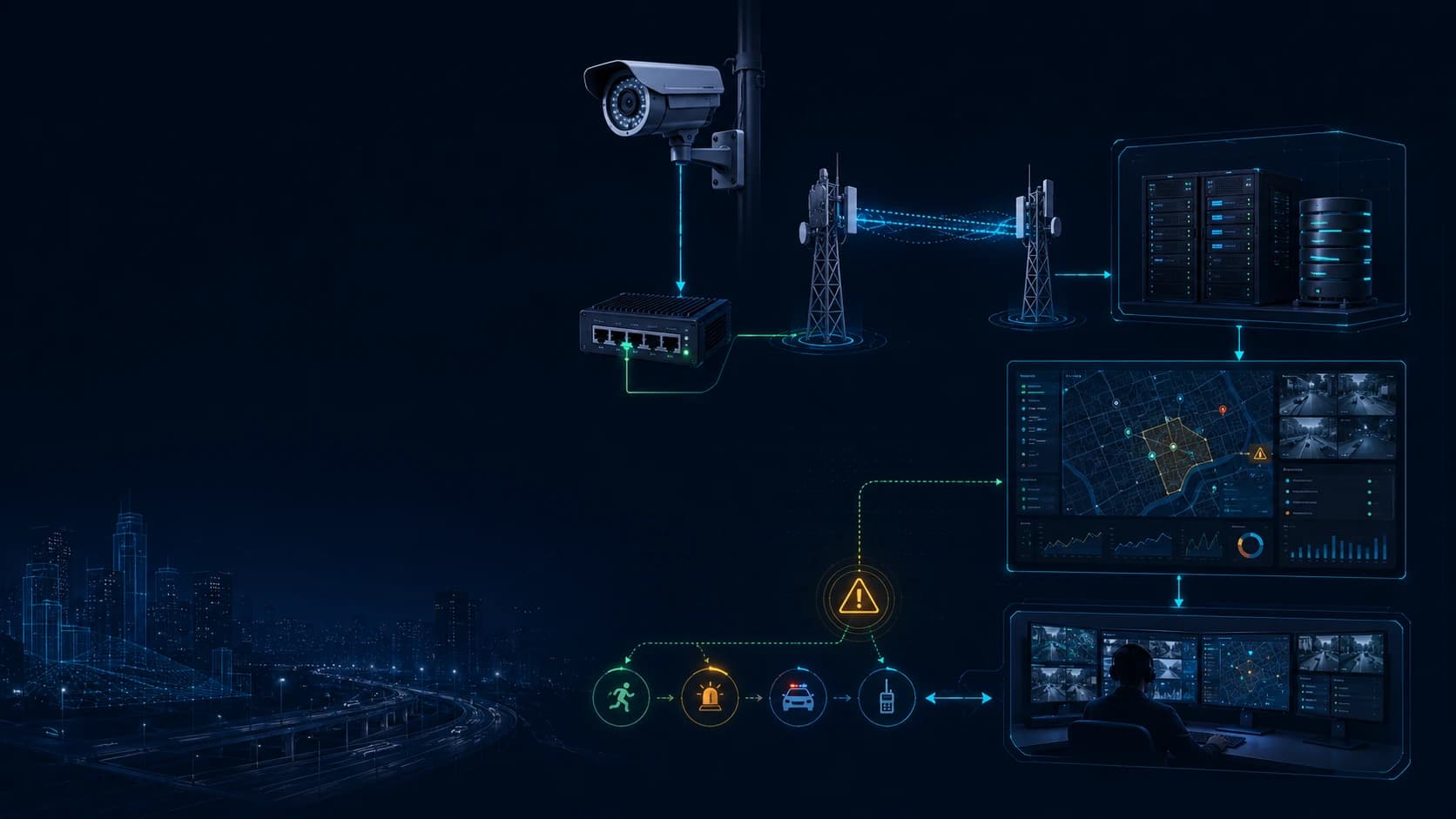
When a security platform is in operation, its continuity doesn't depend on a single piece of equipment — it depends on the state of cameras, servers, storage, communications networks, power, UPS units, batteries, software, licenses, configurations, and the ability to detect and address degradation in time.
That's why we're taking an important step: organizing how we receive, log, and manage technical requests, while helping each institution clearly distinguish what falls under warranty, what falls under support, and what requires a formal maintenance and operational-continuity service.
1 · Attention and traceability
The Support Portal becomes our single official channel
Starting October 1, 2026, any request requiring diagnosis, technical intervention, follow-up, or a committed timeline must be logged through the Visionaria Support Portal.
The Portal lets you create and follow tickets, check their status, keep an auditable history, and associate every intervention with an authorized institutional user.
Email, phone, and WhatsApp will continue to serve only as orientation and contingency channels. When a situation requires technical follow-up, it will only be formalized as a ticket.
Credentials are individual. Access must not be shared between operators, since identifying who requests or authorizes an intervention is part of the service's traceability. Committed response times (SLA) will be counted from formally logged requests, within the scope of the applicable contract, purchase order, or in-force instrument.
2 · A more demanding regulatory context
Why we are strengthening this model now
Video surveillance and public-security systems manage critical infrastructure for municipal operations and may also involve personal data processing. Chile's regulatory framework is raising the expected standard for security, traceability, and availability.
Law No. 21.802, in force since August 12, 2026, strengthens municipal institutions in public security and regulates the use of surveillance technologies within a framework that safeguards personal data protection and privacy.
Law No. 21.719, which takes effect on December 1, 2026, introduces security duties covering confidentiality, integrity, availability, and resilience of processing systems, as well as the ability to quickly restore availability after physical or technical incidents.
The technical guidelines from the Undersecretariat for Crime Prevention (Subsecretaría de Prevención del Delito) for teleprotection systems consider preventive and corrective maintenance and service-level agreements as relevant elements for correct operation and continuity. These guidelines are a technical reference and should be applied according to the specific project and instrument. These rules and guidelines do not mean the law requires hiring Visionaria; they do reinforce the need for institutions to demonstrate how they manage the availability, maintenance, security, and recovery of the systems they use.
3 · Scope of service
Warranty, support, maintenance, and continuity are distinct concepts
Warranty
Covers defects and conditions defined in the contract, bidding documents, proposal, project acceptance, or manufacturer warranty. It does not, by itself, amount to an obligation to keep the system operational.
Technical support
Channels inquiries and incidents, logs the case, and enables follow-up. Committed timelines apply according to the current contract and the formally logged ticket.
Maintenance
Covers preventive and/or corrective tasks when expressly contracted: inspection, cleaning, adjustments, replacements, diagnosis, and recovery, according to scope.
Operational continuity
Integrates functional monitoring, prevention, maintenance, asset health management, response under agreed SLAs, traceability, and reporting to reduce downtime and operational risk.
4 · Risks and exclusions
Factors that require specific management
As a general rule, and unless a contract, bidding documents, accepted proposal, warranty, purchase order, or in-force SLA expressly states otherwise, the following factors should not be confused with a warranty-covered defect or an automatically included maintenance obligation:
Lifecycle
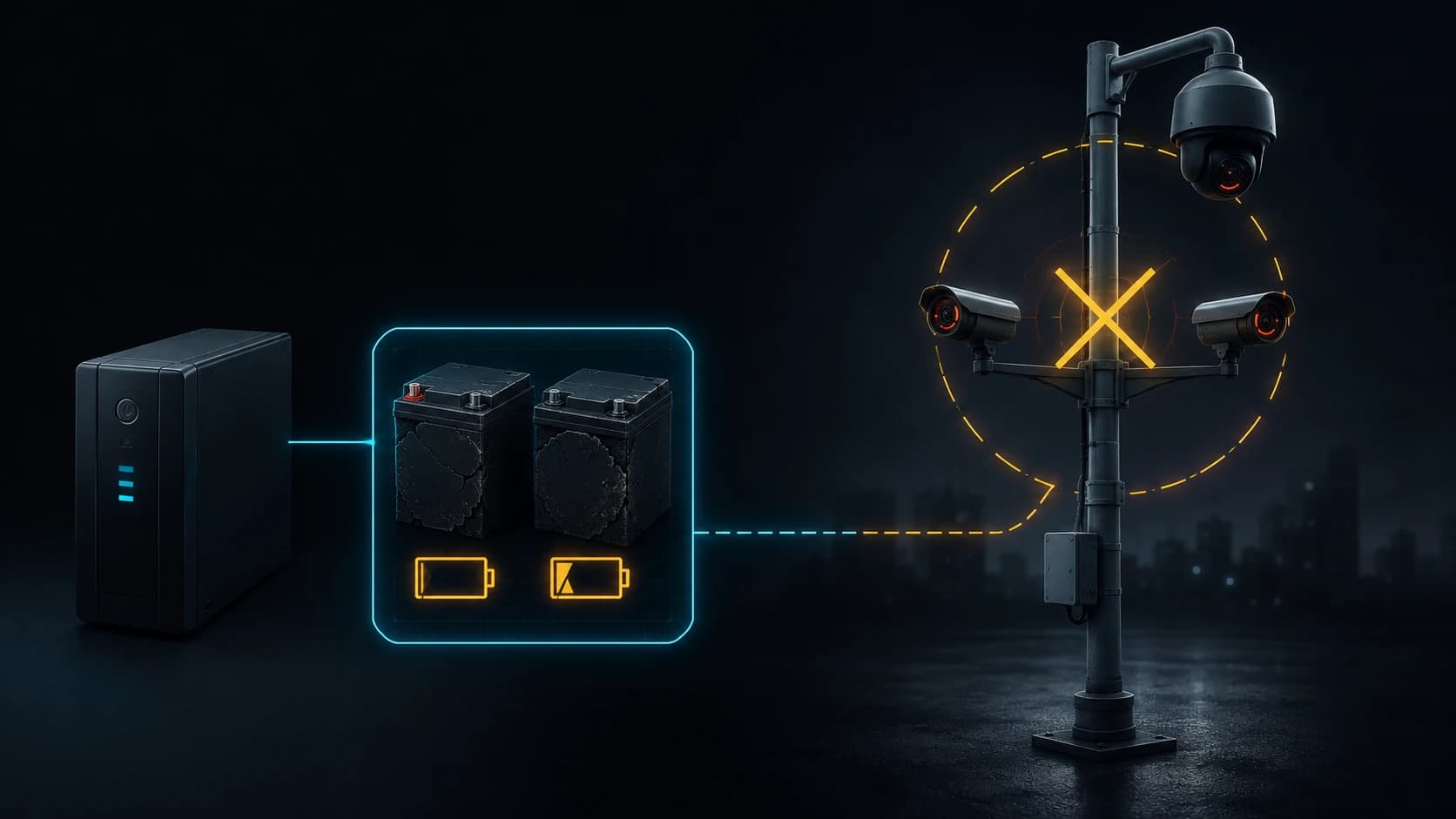
Technological obsolescence, wear, UPS and battery degradation, end of manufacturer support, spare parts, or licenses. These are conditions to be managed through planned replacement and renewal.
External infrastructure
Interruptions or variations in power, telecommunications links, construction works, ducts, poles, fiber, or other third-party services, unless the contract specifically covers them.
Third-party intervention
Vandalism, theft, sabotage, acts of nature, unauthorized tampering, modifications of any kind, work by other contractors, or damage caused by third parties, plus environmental pollution, contamination, and dirt on physical devices — cleaning is only covered under strictly preventive and corrective maintenance services, not as part of the technical warranty.
Extraordinary events
Natural phenomena, accidents, or other external events. Their possible classification as force majeure must be assessed case by case under Article 45 of the Civil Code; it is never presumed automatically.
5 · Visionaria Operational Continuity Service
Operational continuity is managed before the failure happens
A system can be out of warranty and still be critical to public safety. It can also be working while showing signs of degradation that need to be detected before they turn into prolonged downtime. For institutions that need permanent coverage, Visionaria has structured its Systems Operational Continuity Service, whose scope is defined contractually based on each client's criticality, infrastructure, location, and needs.
Depending on the contracted plan, the service can include health and availability monitoring, preventive maintenance, corrective service, backup management (UPS and batteries), obsolescence tracking, escalation, SLA, incident history, reports, and technology-renewal recommendations.
Monitor
Health and availability.
Prevent
Maintenance and degradation.
Detect
Traceable alerts.
Respond
SLA-based response.
Recover
Restoration and verification.
Document
History and reports.
Let's talk about your platform's continuity
If your institution doesn't currently have an active maintenance or operational-continuity contract, we recommend requesting a formal review of your current situation. Our team can identify gaps, review critical assets, and propose a service that reduces downtime and provides a documented response to incidents.
Email: info@visionaria.cl · Phone: +56 22 9254140
Request a coverage reviewAnnex
Support request mechanism
This annex describes, operationally, how an authorized institutional operator creates a support request in the Portal, and how that request is processed until it becomes a ticket with its associated priority and response time.
Step by step: how to create a request
- 1
Access the Portal. The operator goes to www.visionaria.cl/es/soporte from any browser, with no need to install additional apps.
- 2
Sign in with a magic link. They enter their authorized institutional email and receive a one-time access link valid for 15 minutes. There are no passwords to create, remember, or share.
- 3
Preliminary screening checklist. Before enabling ticket creation, the system asks the operator to confirm basic conditions (normal power, no incident on site, anomaly lasting over an hour, equipment restarted, and verified internet access), to filter out trivial causes before escalating a formal request.
- 4
Report details. Once past the checklist, the operator fills in the fault type, the specific location, whether it's a global failure, and, when applicable, the number of cameras or other affected assets.
- 5
Automatic priority calculation. The Portal determines the ticket's priority using objective rules. The operator never assigns priority manually.
- 6
Ticket creation and traceability. The request is logged as a formal ticket with an active SLA, immediately visible in the Portal's "System Status" section, and associated with the institutional user who created it.
Follow-up, permissions, and other channels
Online follow-up
From "System Status" the operator can check active and overdue tickets and their history at any time, along with the reported availability of their systems.
Two access levels
Each institution defines which contacts hold operator permissions (can create tickets) and which only have view-only access, without the ability to create requests.
WhatsApp for orientation, not for logging
Remains available for quick questions only. Any request requiring diagnosis or formal follow-up is channeled through the Portal.
Enabling operators
Adding, removing, or modifying authorized operators is managed through the institution's Visionaria account executive.
6 · Transparency
Contractual scope of this notice
This notice formalizes Visionaria's service model and explains its approach to operational continuity. It does not unilaterally modify contracts, bidding documents, purchase orders, warranties, accepted proposals, or in-force SLAs; in case of discrepancy, the applicable contractual instrument prevails. Each client's actual coverage — including hours, response times, maintenance, spare parts, monitoring, and exclusions — will be as defined in their current or future instruments.
We want our clients to clearly know how to ask for help, what to expect from each service, and how we safeguard the continuity of a platform that matters to people's safety.
Sistemas de Seguridad y Tecnología SpA.
REFERENCE FRAMEWORK · Ley 21.802 · Ley 21.719 · Chilean Civil Code, Art. 45 · SPD · OOTT Teleprotection Systems